



CLIMATE RESPONSIBILITY
Transparency regarding our carbon footprint
At e-Core, we are committed to measuring, managing and reducing our greenhouse gas emissions, while building a more responsible path foward, accross our value chain.
CLIMATE RESPONSIBILITY
Transparency regarding our carbon footprint
At e-Core, we are committed to measuring, managing and reducing our greenhouse gas emissions, while building a more responsible path foward, accross our value chain.
Why do we care about climate responsibility?
As a tech company, we recognize that our environmental impact and carbon emissions, though minimal, continue to affect the planet.
We are proud to announce that our decarbonization journey is now guided by the
Science Based Targets initiative (SBTi), the world’s leading authority on corporate climate targets.

Why do we care about climate responsibility?
As a tech company, we recognize that our environmental impact and carbon emissions, though minimal, continue to affect the planet.
We are proud to announce that our decarbonization journey is now guided by the
Science Based Targets initiative (SBTi), the world’s leading authority on corporate climate targets.
Our approach to emission reduction
More sustainable operations
e-Core operates with a low profile of direct emissions.
Our business model, which prioritizes remote work, reduces emissions typically associated with large physical facilities and operations involving heavy traffic.
Measure and
influence
Our emissions inventory includes direct emissions (scope 1) from our operations, indirect emissions (scope 2) from purchased energy, and relevant emissions (scope 3) from the value chain.
We strive to encourage our partners and customers to work toward a more sustainable world.
Working across the entire value chain
Like many companies in the technology sector, our carbon footprint is primarily linked to the procurement of goods and services.
We are committed to improving transparency, engaging with suppliers, and fostering greater alignment with our goals.
SBTi guidelines
Our targets
In accordance with SBTi guidelines, we have published the text of our approved targets in a clear and transparent manner.

Scope 1 and 2 targets
We are committed to reducing absolute Scope 1 and 2 carbon emissions by 42% by 2030.
Scope 3 targets
We are committed to ensuring that 70% of our suppliers, in terms of emissions related to purchased goods and services, have science-based targets within five years.
Scope 1 and 2 targets
We are committed to reducing absolute Scope 1 and 2 carbon emissions by 42% by 2030.
Scope 3 targets
We are committed to ensuring that 70% of our suppliers, in terms of emissions related to purchased goods and services, have science-based targets within five years.
Our targets
In accordance with SBTi guidelines, we have published the text of our approved targets in a clear and transparent manner.
What are the types of emissions?
01
Scope 01
Direct emissions from our operations
These are generated by sources under e-Core’s direct control, such as fuel use or other in-house operational activities.
02
Scope 2
Indirect emissions from purchased energy
These are the emissions associated with the electricity and energy used in e-Core's offices.
03
Scope 3
Indirect emissions from the value chain
These are linked to activities that are not under e-Core’s direct control but are part of the business’s operations, such as purchased goods and services, suppliers, travel, and other activities related to our operations.
03
Scope 3
Indirect emissions from the value chain
These are linked to activities that are not under e-Core’s direct control but are part of the business’s operations, such as purchased goods and services, suppliers, travel, and other activities related to our operations.
02
Scope 2
Indirect emissions from purchased energy
These are the emissions associated with the electricity and energy used in e-Core's offices.
01
Scope 01
Direct emissions from our operations
These are generated by sources under e-Core’s direct control, such as fuel use or other in-house operational activities.
Quais são os tipos de emissões?
Emissions data
Our carbon footprint
For e-Core, the most significant sources of emissions are concentrated in value chain activities rather than in direct operations. That is why supplier engagement and procurement-related actions are central to our reduction strategy.
By publishing our data, we aim to increase transparency regarding our climate journey and highlight the most relevant areas of our emissions inventory.
4,152
tCO₂e 2023
Emissions
42%
Reduction target
by 2030
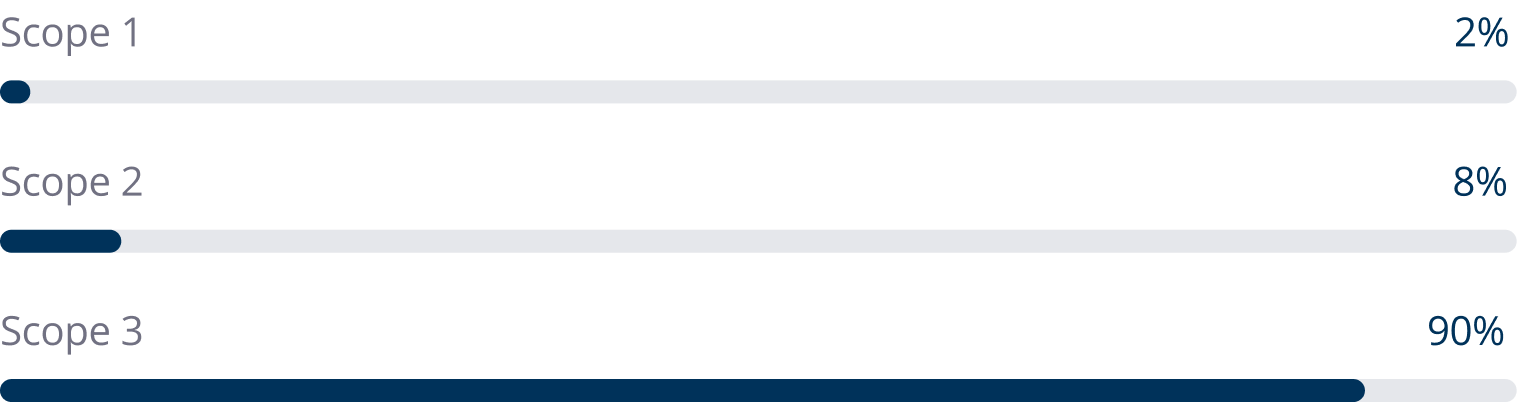
Our carbon footprint
Our 2023 emissions report marks the beginning of our journey to track our carbon footprint.
Starting with this report, we will begin compiling annual data to track the evolution of our emissions with greater transparency over time.
4,152
tCO₂e 2023
Emissions
42%
Reduction target
by 2030
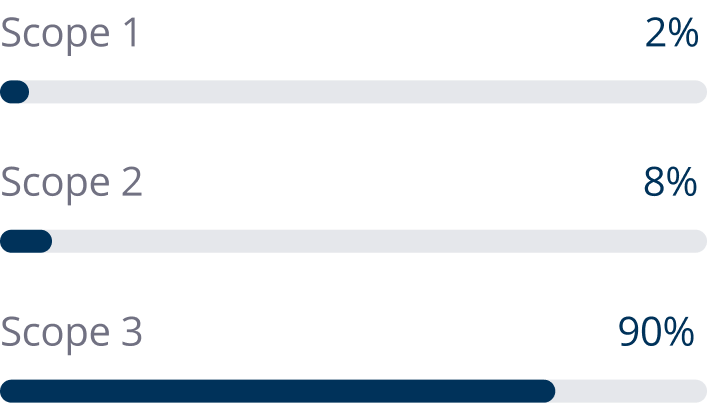
In practice
The work behind our commitment to the environment

Proactive monitoring of our carbon emissions

Use of renewable energy certificates (I-RECs)
Engage suppliers in committing to carbon emission targets

Remote work models that help reduce carbon emissions

Improving our data reporting over time, refining our decision-making

Prioritizing actions to reduce emissions where they are most significant
faq
Learn more about our journey toward
a cleaner environment
Why are Scope 3 emissions higher than those of the other scopes?
In technology companies like e-Core, it is common for the majority of emissions to be concentrated in Scope 3, which encompasses indirect activities linked to the value chain. This includes, for example, purchased goods and services, suppliers, partners, third-party infrastructure, travel, and other activities connected to the operation of our business.
Since e-Core operates with a lean structure of direct emissions, Scope 3 naturally represents the most significant portion of our emissions inventory.
Does e-Core control its suppliers’ emissions?
No. e-Core does not directly control third-party emissions.
Our role is to increase visibility into these emissions, prioritize the suppliers most relevant to our value chain, and progressively encourage alignment with science-based targets.
This approach is part of our climate responsibility and our commitment to acting transparently regarding our environmental impacts.
Can e-Core’s carbon footprint change over time?
Our carbon footprint may change over time due to various factors, such as operational changes, business growth, greater visibility into the value chain, and improvements in data quality. We continuously monitor our emissions and maintain targets aligned with climate science, focusing on increasing transparency, strengthening our management, and directing efforts toward the most relevant areas of the inventory.
Our responsibility lies in clearly understanding this scenario and acting consistently throughout the journey.