




Speed wins: Can your team reallocate resources in two weeks?

By the Tempo team • April 9, 2026
By the Tempo team

Every quarter, market conditions shift. A product roadmap needs recalibration. A key customer signals new requirements. A competitor makes a move.
 

In this environment, organizations that can respond in days gain a measurable advantage while those that take months fall behind.

That gap is wider than most realize. At Tempo Software, we recently surveyed 667 planning and portfolio management (PMO) leaders across 43 countries about how their organizations handle these pivots.
 

Our findings reveal a stark divide: organizations that can reallocate resources in under two weeks operate at a fundamentally different level of responsiveness and performance.

The speed benchmark


Across all respondents, 55% can move resources to new priorities within two weeks. That sounds reasonable until you segment the data.


We identified about 10% of respondents who we refer to as "Dynamic Planners" – those with strong alignment, integrated processes, and regular plan reviews. Among those, 80% can reallocate budgets and resources in two weeks or less.


Meanwhile, just 14% of the more siloed organizations – the ones we call “Plodders” in the report, can move that quickly.

Even small delays in responding to strategic shifts carry significant financial consequences. At a large enterprise, delays can translate into $200,000 to $500,000 per day in lost opportunity, idle capacity, and missed market windows.


At scale, these delays can compound quickly, turning incremental inefficiencies into substantial financial impact.

Why speed has become a strategic requirement


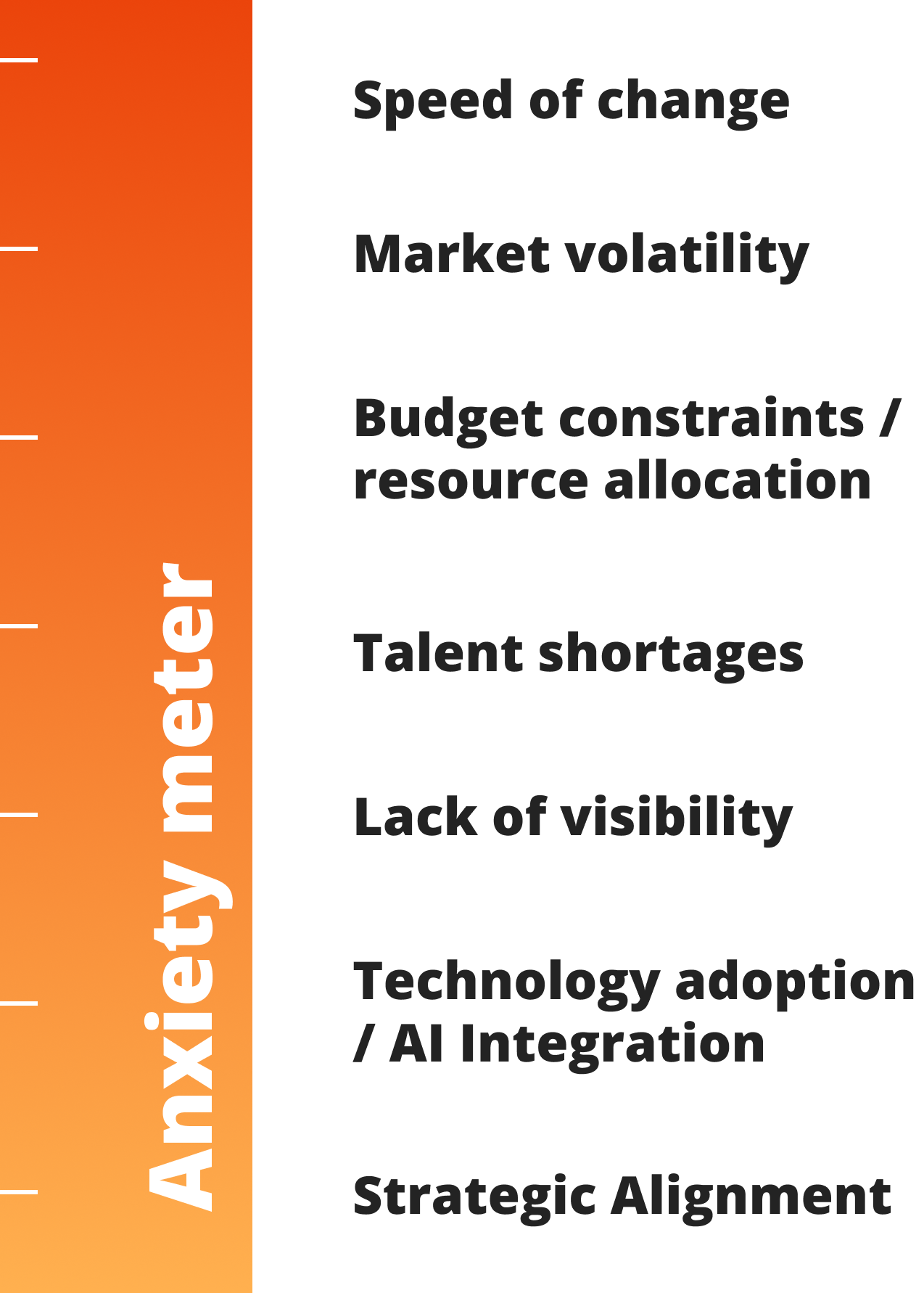
Our report asked PMO leaders what keeps them up at night. Speed of change landed as the top concern for portfolio success over the next 12 months. Market volatility came in second.


Organizations that move quickly are not just reacting faster. They are making better decisions because they operate with more complete and current information. The report found that 95% of Dynamic Planners have good or complete visibility into their resource capacity and allocation. Among Plodders? Only 18% can say the same.


When organizations have real-time visibility into where work is happening, how resources are allocated, and where capacity exists, decision-making shifts from reactive guesswork to informed planning.

The performance gap

Organizations that reallocate quickly report that 74% of initiatives deliver ROI or strategic value. Only 66% of projects deliver results at the slower organizations in our sample. While this eight-point gap may appear modest, it compounds significantly across portfolios over time. 


Confidence tells a similar story. When asked if they can adapt their portfolio to changing conditions, 89% of Dynamic Planners said they're very or extremely confident. Among Plodders only 14% have the same confidence.

The pattern is clear: speed and confidence are closely linked. Organizations that can adapt quickly build confidence in their ability to respond. At the same time, those constrained by slower processes become more risk-averse over time.


The re-forecasting bottleneck


One specific bottleneck shows up consistently. About 21% of all respondents take over a month to re-forecast when priorities shift. In a dynamic environment, that delay is significant. By the time forecasts are updated, conditions have often already changed again.


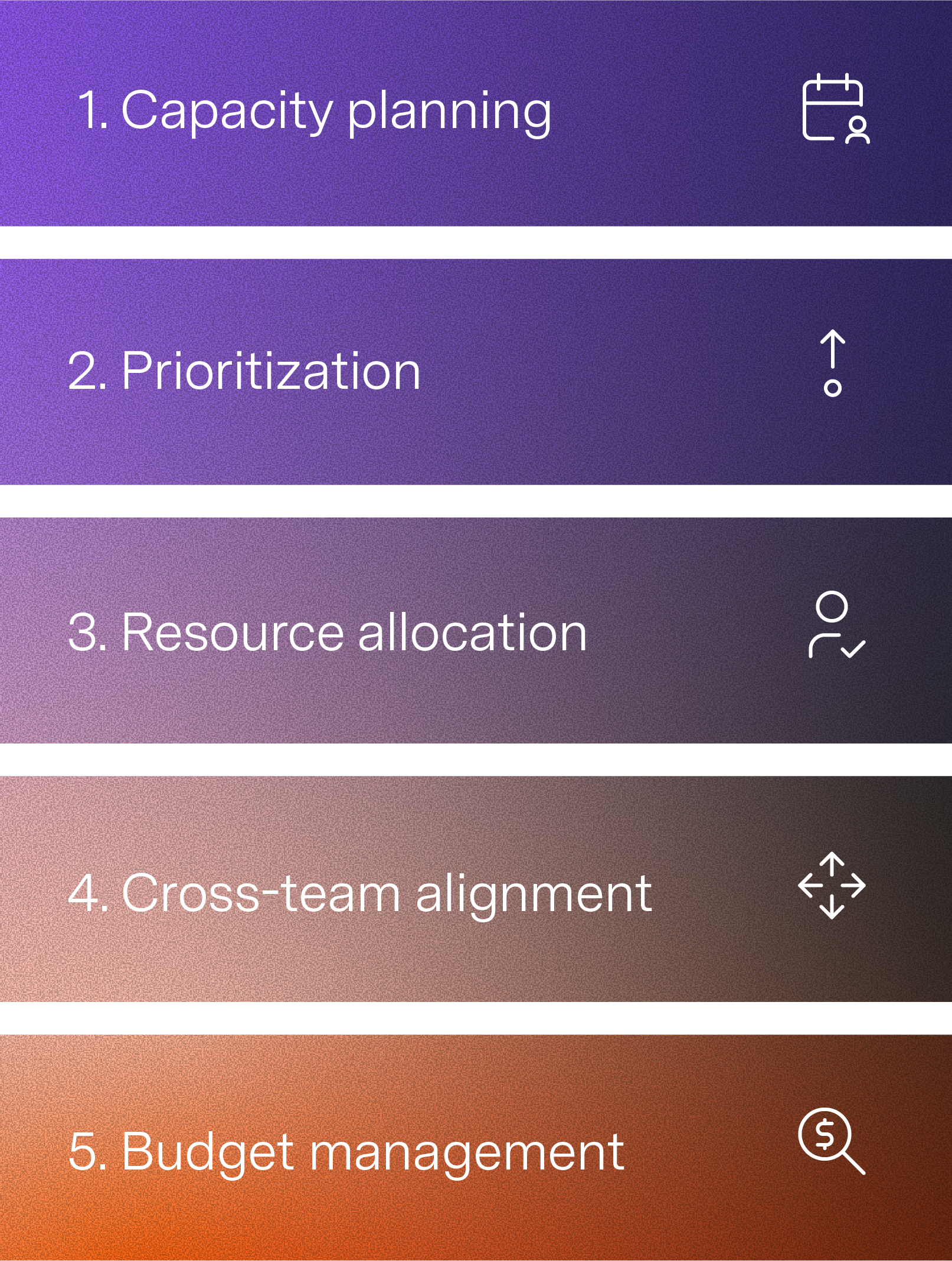
When Tempo asked about top portfolio execution struggles, capacity planning topped the list at 29.5%. Resource allocation and prioritization weren't far behind.


These are not strategy challenges – they are coordination and visibility gaps that can be addressed with the right systems and processes.


The core issue is not a lack of strategic intent, but the lack of real-time insight into what is actually happening, combined with decision-making processes that were not designed for speed or scale. 

What separates the fast from the slow


Dynamic Planners share four consistent traits:

First, they encourage organizational alignment across teams. When teams understand how their work connects to broader strategic outcomes, decisions can be made more quickly and with greater confidence.

Second, they operate integrated portfolio processes. Rather than relying on fragmented tools and disconnected data, they establish centralized, shared visibility across planning and execution.

Third, they use scenario planning. They develop and evaluate scenarios in advance, enabling them to understand potential downstream impacts and respond quickly when conditions change.

Fourth, they review and adjust plans monthly or more frequently. In ever-changing environments, planning must evolve continuously to remain relevant and useful.

What transformation looks like

Organizations do not need to transform everything at once, but they must address a foundational requirement: visibility. Without a clear, real-time view of capacity and resource allocation, effective decision-making becomes a herculean task. 

The starting point is establishing a complete and current view of work, capacity, and resource allocation across the entire organization. From there, organizations can implement consistent review cadences that compare plans against real-time execution and enable ongoing adjustment. 

Over time, this discipline transforms reallocation from a reactive, high-friction process into a continuous and structured capability. 

The findings of our report point to a broader conclusion: reallocation speed is no longer a tactical capability. It is a core requirement for operating effectively in an environment that is dynamic. 

For organizations that build the right foundations – visibility, integration, and continuous planning – it is an achievable capability. 


Read the full report for a deeper dive into why speed and adaptability win.


Logo for e-core with an abstract figure and up arrow design, and "e-core" text. Blue and white colors.

e-Core

We combine global expertise with emerging technologies to help companies like yours create innovative digital products, modernize technology platforms, and improve efficiency in digital operations.

You may also be interested in:

March 18, 2026
Learn how agentic AI helps IT teams prevent incidents before they happen. Join this webinar on proactive ITOps, AI governance, and reducing operational noise.
Discover how AI-driven IT operations helped a leading on-demand delivery platform reduce MTTR by 70%
By Ana Quaresma February 27, 2026
Discover how AI-driven IT operations helped a leading on-demand delivery platform reduce MTTR by 70%
By Vando Gonçalves February 19, 2026
AI and governance must evolve as agentic AI makes autonomous decisions. Learn how organizations can balance control, observability, and scale in IT.