



Topic
Industry
Content Type
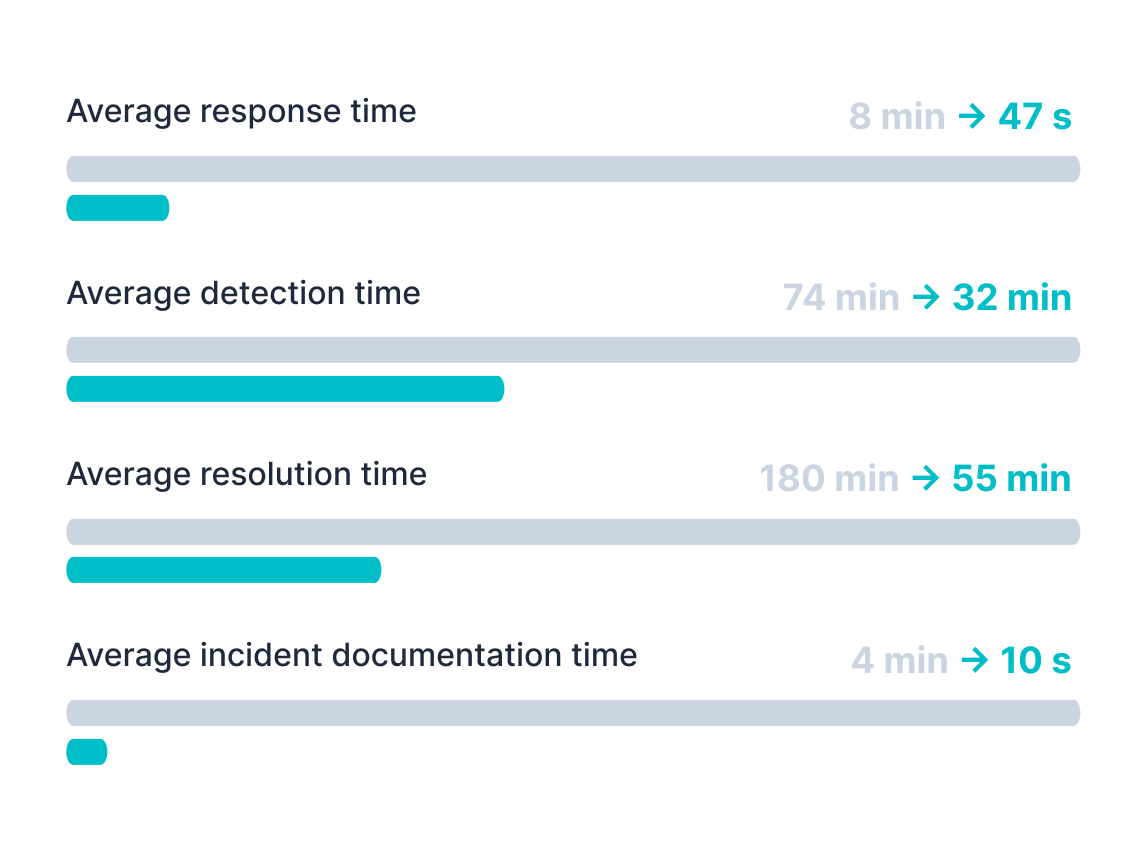
Discover how AI-driven IT operations helped a leading on-demand delivery platform reduce MTTR by 70%

AI and governance must evolve as agentic AI makes autonomous decisions. Learn how organizations can balance control, observability, and scale in IT.

Download our whitepaper on AI for Construction and Real Estate. Explore challenges, solutions, and proven ROI from AI adoption across the project lifecycle.

Defining value from AI projects early on ensures measurable business outcomes. Learn frameworks, costs to consider, and a real-world case study.

Discover how agile frameworks help scale AI projects from pilots to real outcomes.

Discover how AI streamlines AWS migration with automation, visibility, and post-migration optimization for scalable, cost-efficient operations.

Discover AI delivery best practices to prevent technical debt, improve scalability, and ensure reliable, long-term business impact.

A top insurer aligned data and AI to cut waste, speed up delivery, and turn preauthorization into a fast, accurate, real-time process.

For this episode of e-Core’s Fireside Chat, we explore how trusted advisor relationships help organizations unlock the true potential of human-AI collaboration. Host Dan Teixeira, NA Managing Director at e-Core, sits down with Nicole Bruno, Head of Client Strategy and Success at e-Core, to reflect on the importance of empathy and human connection in tech-enabled environments. While AI and frameworks can optimize our processes, it’s people who bring creativity, problem-solving, and transformation to life. From navigating strategic pivots to supporting executive teams, the conversation dives into how building trust and truly listening to clients leads to smarter collaboration and better outcomes, with or without AI. As Nicole puts it, “people are the work.” And in a world of increasing automation, this episode reminds us why putting humans first is what makes change sustainable. Join us as we explore ways of leveraging team collaboration in an AI era with a human-centered mindset. Key moments: 00:37 Introductions 02:07 From Subject Matter Expert to Trusted Advisor 03:56 Connecting teams, building bridges 06:40 Having the right culture fit 08:43 Human touch: people are the work 10:21 Dealing with AI in the workplace 12:38 Personalized approach 14:26 How AI builds a holistic view 15:52 How to leverage AI use for increased collaboration 17:48 The key to human-AI collaboration success

Digital transformation is no longer optional—it’s necessary for businesses across all industries. In today’s fast-evolving landscape, organizations that fail to adapt their systems of work risk losing relevance and competitiveness. However, digital transformation isn’t just about adopting new technologies. It requires a continuous structural and cultural evolution that reshapes how work happens today and drives future success. Many organizations face a critical challenge: implementing technology without addressing process inefficiencies, cultural shifts, and organizational structures. This often leads to misalignment, data silos, and poor collaboration, directly impacting business outcomes. Companies need a structured, systematic, and business-aligned approach to achieve true digital transformation. This is where Atlassian’s System of Work comes in—providing an integrated set of solutions and best practices that empower organizations to streamline their transformation journey and maximize results. The four pillars of digital transformation Digital transformation only succeeds when combined with organizational, agile, and cultural changes. Simply digitizing inefficient processes or investing in technology without preparing teams for a new way of working limits success. Atlassian’s System of Work supports this essential shift, often overlooked by organizations. These four interconnected pillars lay the foundation for long-term success: Digital transformation: leveraging digital technologies to optimize processes, enhance operations, and create new business models. Example: implementing AI and analytics to automate workflows. Organizational transformation: structural and cultural changes that improve efficiency and competitiveness. Example: breaking down silos and reorganizing teams for agility. Agile transformation: adopting agile principles to create faster, more adaptive processes. Example: implementing scalable agile frameworks across the enterprise. Cultural transformation: shifting mindsets and values to foster collaboration and innovation. Example: encouraging experimentation and continuous learning in the workplace. → Read more: six tips to create valuable automations in Jira What is Atlassian’s System of Work? Atlassian’s System of Work is a comprehensive approach to work management, built around a portfolio of powerful tools, including Jira Software, Jira Align, Confluence, Trello, Bitbucket, and Jira Service Management. This approach eliminates silos, enhances collaboration, and ensures transparency and efficiency across the organization—leading to greater predictability and agility in workflows. Why was the System of Work created? Atlassian’s System of Work was developed to address a critical business need: integrating all aspects of work so that diverse and distributed teams can collaborate effectively and transparently. It helps organizations overcome common challenges such as: Lack of alignment between strategy and execution Poor visibility into project progress Difficulty synchronizing different departments and functions Low predictability and complex change management With this structured approach, companies can align teams more effectively, eliminate inefficiencies, and accelerate value delivery to the market. Business impact: what’s in for companies? Adopting Atlassian’s System of Work drives tangible business benefits, including increased organizational scalability, data-driven decision-making, and improved operational efficiency. By reducing manual work and streamlining workflows, productivity rises while fostering a more collaborative culture. Additionally, optimized resource allocation reduces costs and accelerates time to market. Market data indicate that companies utilizing this approach experience significant benefits, including productivity increases of 25% to 30% and reductions in delivery times of up to 40%. Atlassian’s ability to seamlessly connect tools, processes, and data across teams drives this success. This interconnectedness — referred to as “network extension” in the System of Work framework — creates a more fluid and efficient digital ecosystem. How to use Atlassian’s Network Extension practically 🔹 Tool Integration: the System of Work connects tools like Jira, Confluence, and Trello into a unified platform, ensuring centralized data access. 🔹 Team Connectivity: it fosters collaboration across distributed teams, breaking down functional silos. 🔹 Automation & Workflow Optimization: Atlassian enables cross-functional workflow automation, eliminating bottlenecks and boosting efficiency. 🔹 Visibility & Transparency: from C-level executives to individual contributors, everyone has access to a single source of truth, ensuring real-time progress tracking. 🔹 Unified Communication: Platforms like Confluence and Slack integrations help centralize information, preventing data loss and fragmentation. → Read more: how Jira Service Management bridges IT and business goals How to implement Atlassian’s System of Work successfully Atlassian’s System of Work redefines organizations’ way of operating, connecting strategy, execution, and collaboration to fuel digital transformation. As a Platinum Partner, e-Core specializes in digital transformation, System of Work optimization, and Atlassian solutions implementation across enterprise environments. If your organization seeks greater strategic alignment, efficiency, productivity, and collaboration, reach out to us to accelerate your transformation journey.

By Gabriel Marchelli, Startup Solutions Architect at AWS; Bruno Vilardi, Solutions Architect at e-Core and AWS Community Builder; Matheus Gonçalves, Data Engineer; and Ricardo Johnny, Cloud Architect at EEmovel.

Learn how to build a support model that makes AI truly effective