

Takeaways from Atlassian Team ’23: Day Two

e-Core • April 20, 2023

Big news from Atlassian at Team’23!


The second day of the Atlassian Team ’23 was filled with exciting sessions and exclusive announcements from Atlassian. With so much to see and learn, the second day proved to be just as engaging as the first, leaving attendees inspired and eager to implement the new insights and tools into their work.


Check out day two key highlights:

Atlassian Intelligence, Generative AI from Atlassian


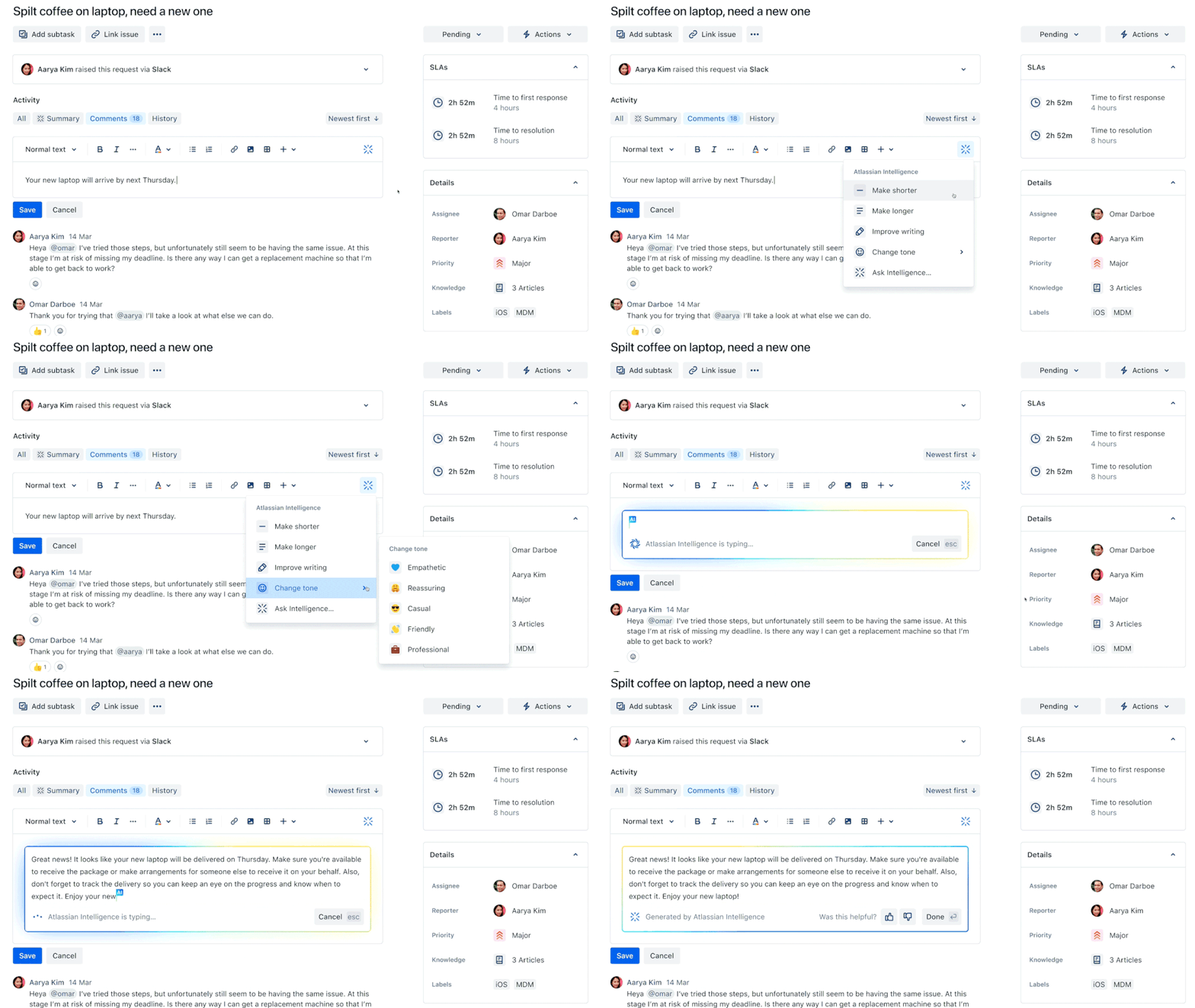
Mike Cannon-Brookes, co-founder and co-CEO of Atlassian, announced Atlassian Intelligence, a generative artificial intelligence that will be incorporated into all Atlassian Cloud products in the coming months.


The “virtual teammate” has a natural language interface and will be built from the machine learning resources already available in Atlassian products to interpret the knowledge bases of each company and also from the internet. Key features of Atlassian Intelligence include:


  • Handling requests with a virtual assistant using natural language via Slack;
  • Possibility to choose the tone of responses to tickets in Jira Service Management;
  • Creation of rich texts such as tables, emojis, checklists, etc. in all Atlassian Cloud products;
  • Summarization and delegation of tasks between teams based on unstructured content in Confluence.


The features are under development and will be released as a beta test for selected users. You can request access in advance.


Jira Product Discovery

A new product is on the way to the Atlassian family, designed to assist in product development. The main goal of Atlassian’s news product is to offer Product Managers, Business Analysts, and their teams a platform to ideate, prioritize, and communicate throughout the entire process of developing new products.


Among the features presented are:

  • Ideas and Insights: Gather ideas in one place using various platforms as sources, such as Google Docs, Slack, Zendesk, Confluence, or anywhere on the internet.
  • Impact Assessment: An interface created to quickly compare key criteria in the ideation process, such as risk and effort.
  • Product Roadmap: An interface to organize and share the product roadmap with other stakeholders, whether internal or external.
  • Product Timeline: Actions related to product development in an integrated timeline view in Jira Software.


Confluence Whiteboards

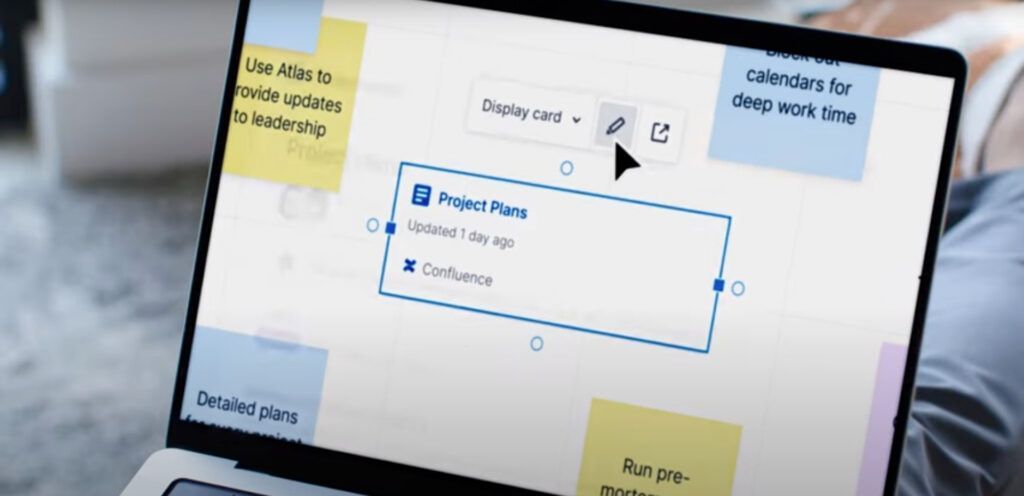
Once again, Atlassian has reinvented remote teamwork! With this new feature, teams can easily create and share digital whiteboards, capture ideas and feedback, and collaborate in real-time from anywhere in the world. The tool includes various templates for different types of visual aids, such as flowcharts, diagrams, and sticky notes, allowing teams to visually organize their ideas and processes. Confluence Whiteboards integrates seamlessly with other Atlassian products, such as Jira and Trello, making it easy to turn ideas into action items. This new product is an exciting addition to Atlassian’s suite of collaboration tools and is sure to make a big impact on how teams work together. Learn more about it!


Beacon

The newly released called “Atlassian Beacon” enables organizations to gain better visibility and control over their distributed cloud environments. With Atlassian Beacon, teams can easily monitor and manage their cloud applications and infrastructure, gain insights into performance and security, and receive real-time alerts and notifications for potential issues. The solution integrates with popular cloud providers, such as AWS, Azure, and Google Cloud, and provides a centralized dashboard for all cloud resources. Atlassian Beacon also supports automation through API integration and customizable workflows, allowing teams to streamline their cloud management processes. With this new solution, Atlassian continues to demonstrate its commitment to helping teams collaborate and work more efficiently, no matter where they are located. Today every Atlassian customer can sign up for early access program!


Stay tuned for more

The second day of Atlassian Team ‘23 provided us with valuable insights! It was an amazing opportunity to learn from some of the best in the industry and to network with fellow professionals. Follow us on social media for a comprehensive overview of our key takeaways from the event, and be sure to check out e-Core’s booth #69 if you’re in Vegas. It’s been a fantastic event, and we look forward to implementing the new ideas and strategies we’ve learned into our work. Thanks for a great two days, Atlassian!

LET'S CONNECT

Ready to unlock your team's potential?


e-Core

We combine global expertise with emerging technologies to help companies like yours create innovative digital products, modernize technology platforms, and improve efficiency in digital operations.


You may also be interested in:

Por Adriele Radmann 3 de agosto de 2026
Discover why customer support is your strongest shield against churn. Learn how to connect support, product dev, and AI to protect recurring revenue.
23 de julho de 2026
See how Banco Inter migrated to Jira Cloud, cut $200K in annual costs, and boosted team efficiency with e-Core as its implementation partner.

Por Flávia Batista 10 de julho de 2026
There is a belief that runs deep inside IT operations teams: a noisy environment is a healthy one. If alerts are firing constantly, if tickets are piling up, if the on-call rotation is getting hit at 2am, that means monitoring is working. The tools are catching things. I understand where this comes from. In the early days of observability, silence was genuinely suspicious. A quiet dashboard often meant a gap in coverage, a misconfigured rule, something important slipping through undetected. So teams learned to treat volume as proof, and that instinct stayed long after the environment around it changed. But noise is not proof that monitoring is working. In most cases, it is proof that something upstream was never fixed. Automation at the wrong end When alert volume becomes unsustainable, the response is almost always the same. Leadership looks at the backlog (a thousand tickets a day, engineers buried, SLAs slipping) and reaches for automation at the remediation end of the pipeline: AI agents plugged into monitoring tools, scripts that fire when incident X arrives, routing logic that moves tickets faster. These are reasonable responses to an unreasonable situation, but they treat cost rather than cause. Most of those alerts should never have been generated. Processing them faster does not change why they exist.