

Major Brazilian energy provider boosts scalability and efficiency with AWS

e-Core • July 31, 2025

With e-Core’s support, the Brazilian energy giant Energisa completed a major cloud migration project, modernizing its infrastructure and improving performance.

About Energisa


Energisa Group is the largest privately held electric power company in Brazil with 100% national capital, representing a complete energy solutions ecosystem. The group employs 16,000 people and operates across four major business fronts: Energisa Distribuidora (Distribution), Energisa Transmissora (Transmission), (re)energisa (Renewables and Innovation), and Voltz (Digital Services).

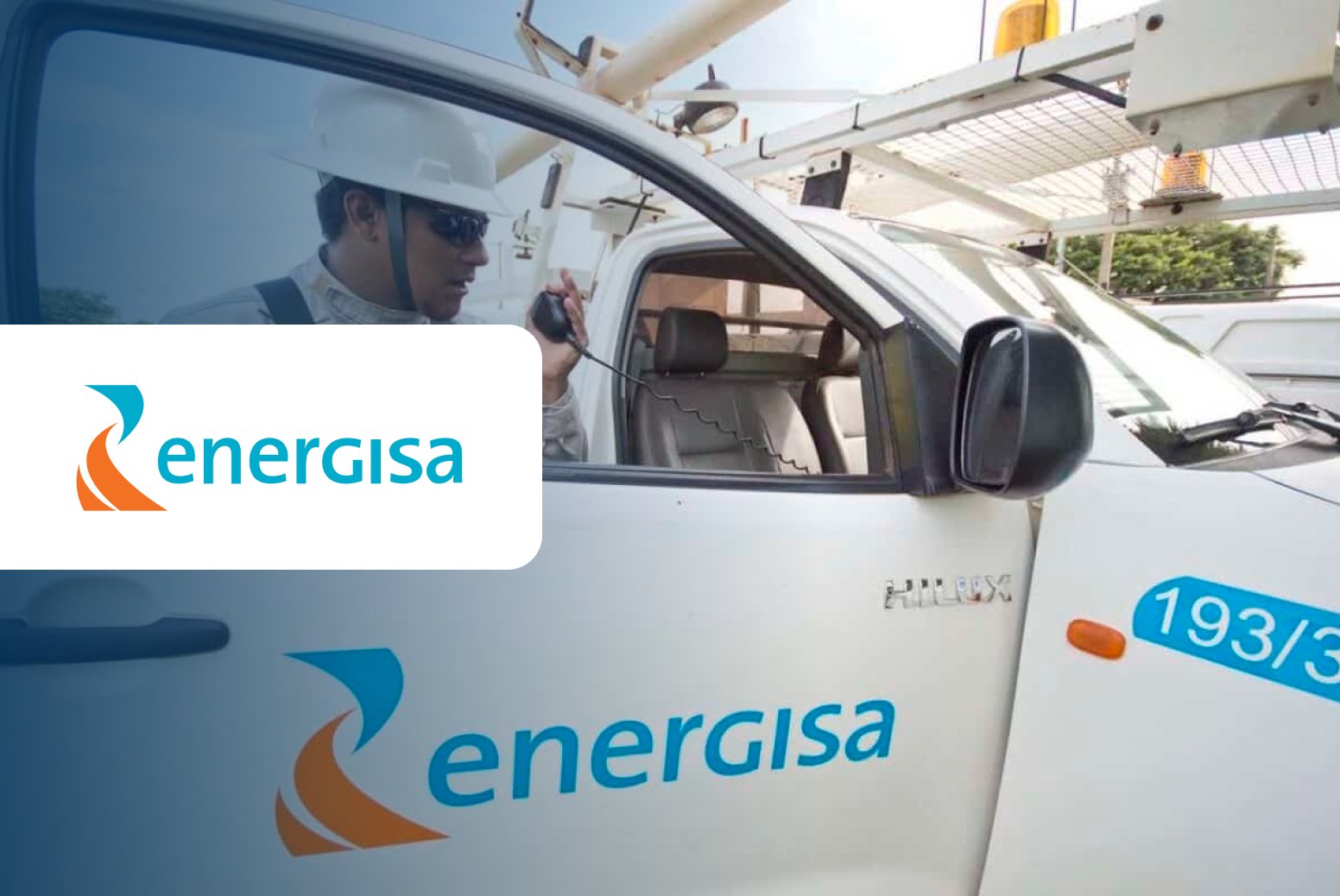
Energisa worker in truck, using radio, with logo visible. White truck, blue and orange logo.

The challenge


As Energisa expanded its operations and acquired third-party companies, it became essential to establish a centralized governance structure to manage its AWS accounts. This led to the implementation of a Foundation project, which proved critical in ensuring consistent control, security, and efficiency across all accounts.


Alongside the AWS Foundation implementation, Energisa also launched a comprehensive initiative to migrate and modernize its applications. This involved moving existing applications and workloads from on-premises infrastructure to the AWS cloud environment.


One of the key drivers behind adopting the AWS Landing Zone framework was the need to simplify the management of multiple AWS accounts. With different business units operating independently — potentially using diverse services and configurations — it was crucial to establish a standardized approach. The Landing Zone allowed Energisa to centralize account management, providing greater visibility, control, and collaboration across the organization.

The solution


As part of the Foundation project, Energisa took the opportunity to modernize one of its critical front-end applications by transitioning to a serverless architecture. The application, which previously relied on traditional server-based infrastructure, underwent a significant transformation to leverage AWS Lambda and other cloud-native services.


The migration to a serverless environment was facilitated by the Foundation initiative, specifically through the use of AWS Control Tower. AWS Control Tower simplified the setup and governance of the secure multi-account environment required for the serverless architecture. It provided standardized templates and guardrails to ensure compliance with operational and security best practices, making the migration process smoother and more efficient.


As a result, Energisa experienced increased scalability, cost optimization, and operational efficiency. The team can now focus on delivering value to customers without the burden of managing infrastructure, while benefiting from centralized governance and visibility enabled by AWS Control Tower.

Results achieved


The Foundation project brought governance and compliance through continuous monitoring and remediation capabilities. It automatically assessed account compliance against established policies and provided corrective actions for any non-compliant resources or configurations. This helped Energisa maintain a proactive and consistent approach to security and compliance across all AWS accounts.


The serverless architecture delivered greater fault tolerance and high availability. AWS Lambda automatically replicates the application across multiple Availability Zones, ensuring resilience and minimizing downtime. This enhanced reliability was especially important for Energisa’s front-end application, as it ensured uninterrupted access for customers — achieving over 70% availability in the past three months, with 100% uptime in the most recent month according to Route53 health checks.


By incorporating AWS Control Tower into the project, Energisa established a robust and scalable governance model for its AWS accounts. The combination of automated provisioning, guardrail enforcement, centralized management, and continuous monitoring provided by AWS Control Tower significantly streamlined operations, strengthened security, and ensured regulatory compliance across third-party and acquired companies within the Energisa ecosystem.


Looking for more stories like this? Explore other success cases and learn how we support companies across industries on their cloud journey.


Logo for e-core in white text and blue graphic on a blue background. Graphic shows an upward arrow and person icon.

e-Core

We combine global expertise with emerging technologies to help companies like yours create innovative digital products, modernize technology platforms, and improve efficiency in digital operations.


You may also be interested in:

By Adriele Radmann August 3, 2026
Discover why customer support is your strongest shield against churn. Learn how to connect support, product dev, and AI to protect recurring revenue.

July 23, 2026
See how Banco Inter migrated to Jira Cloud, cut $200K in annual costs, and boosted team efficiency with e-Core as its implementation partner.

By Flávia Batista July 10, 2026
There is a belief that runs deep inside IT operations teams: a noisy environment is a healthy one. If alerts are firing constantly, if tickets are piling up, if the on-call rotation is getting hit at 2am, that means monitoring is working. The tools are catching things. I understand where this comes from. In the early days of observability, silence was genuinely suspicious. A quiet dashboard often meant a gap in coverage, a misconfigured rule, something important slipping through undetected. So teams learned to treat volume as proof, and that instinct stayed long after the environment around it changed. But noise is not proof that monitoring is working. In most cases, it is proof that something upstream was never fixed. Automation at the wrong end When alert volume becomes unsustainable, the response is almost always the same. Leadership looks at the backlog (a thousand tickets a day, engineers buried, SLAs slipping) and reaches for automation at the remediation end of the pipeline: AI agents plugged into monitoring tools, scripts that fire when incident X arrives, routing logic that moves tickets faster. These are reasonable responses to an unreasonable situation, but they treat cost rather than cause. Most of those alerts should never have been generated. Processing them faster does not change why they exist.